
Obiettivi | Certificazione | Contenuti | Tipologia | Prerequisiti | Durata e Frequenza | Docenti | Modalità di Iscrizione | Calendario
Il Corso CSAU – Introducing Automation for Cisco Solutions fornisce ai Partecipanti una panoramica strutturata delle competenze fondamentali di network automation, programmability e NetDevOps applicate agli ambienti Cisco. Il corso introduce i concetti, gli strumenti e i workflow necessari per comprendere come l’automazione possa migliorare la gestione end-to-end delle reti, riducendo attività manuali, aumentando la coerenza operativa e favorendo la collaborazione tra team di networking, operations e sviluppo. Durante il corso vengono trattate tecnologie e metodologie essenziali come Python, Netmiko, HTTP-based APIs, Postman, Python requests, RESTCONF, NETCONF, YANG, YANG tools, XML, JSON, YAML, protobuf, Ansible, Git, Jinja2, Docker, Vagrant e Python virtual environments. Il programma approfondisce l’utilizzo di API per interagire con dispositivi di rete, la gestione dei data formats, l’impiego dei data models, l’automazione tramite script Python, la creazione di Ansible playbooks e la generazione di configurazioni tramite template. Il percorso affronta inoltre i principi di DevOps applicati al networking, introducendo concetti come version control, automation development environments, pipeline operative, collaborazione tra team e gestione ripetibile delle configurazioni. I Partecipanti acquisiscono così le basi per comprendere e utilizzare strumenti moderni di network automation in scenari operativi reali.
Contattaci ora per ricevere tutti i dettagli e per richiedere, senza alcun impegno, di parlare direttamente con uno dei nostri Docenti (Clicca qui)
oppure chiamaci subito al nostro Numero Verde (800-177596).
Calling from abroad? Reach us at +39 02 87168254.
Obiettivi del corso
Di seguito una sintesi degli obiettivi principali del Corso CSAU – Introducing Automation for Cisco Solutions:
- Comprendere il ruolo di network automation e programmability nella gestione moderna delle reti Cisco.
- Utilizzare Python, Netmiko, Python requests e HTTP-based APIs per automatizzare dispositivi e workflow di rete.
- Interpretare e utilizzare data formats e data models come XML, JSON, YAML, protobuf e YANG.
- Applicare RESTCONF, NETCONF, YANG tools, Ansible, Git e Jinja2 nei processi di automazione.
Certificazione del corso
Questo corso tratta contenuti trasversali a diverse Certificazioni Cisco Enterprise e Automation
Contenuti del corso
Examining Network Management and Operations
- Role of network automation and programmability in modern network operations
- Benefits of automation for end-to-end network management
- Differences between manual CLI workflows and automated workflows
- Operational challenges addressed by automation and programmability
- Evolution of network operations toward programmable infrastructure
Exploring Software Development Methodologies
- Overview of software development methodologies for automation projects
- Differences between waterfall and agile approaches
- Application of agile principles to network automation workflows
- Collaboration between networking, operations, and development teams
- Role of iterative development in automation use cases
Using Python for Network Automation
- Use of Python for basic network automation tasks
- Interpretation and troubleshooting of Python scripts
- Fundamental programming constructs such as variables, loops, conditionals, and functions
- Use of Python scripts for network automation use cases
- Introduction to libraries and modules used in automation workflows
Describing NetDevOps: DevOps for Networking
- Core concepts of NetDevOps and DevOps applied to networking
- Role of automation pipelines in network operations
- Collaboration between network engineers, developers, and operations teams
- Use of repeatable workflows to improve network change management
- Benefits of DevOps principles for network reliability and efficiency
Managing Automation Development Environments
- Role of development environments in network automation
- Use of Python virtual environments for dependency management
- Introduction to Vagrant for reproducible lab environments
- Use of Docker for containerized automation environments
- Management of tools and environments for consistent automation workflows
Introducing HTTP Network APIs
- Core concepts of HTTP-based APIs for network automation
- Structure of API requests, methods, headers, and responses
- Use of tools such as Postman to interact with APIs
- Authentication and basic API communication workflows
- Role of APIs in programmable network device management
Reviewing Data Formats and Data Encoding
- Overview of structured data formats used in automation
- Differences between XML, JSON, YAML, and protobuf
- Use cases for each data format in network automation
- Reading, interpreting, and modifying structured data
- Relationship between data formats, APIs, and automation scripts
Using Python Requests to Automate HTTP-Based APIs
- Use of the Python requests module for API automation
- Construction of HTTP requests through Python scripts
- Processing API responses and structured data
- Automation of devices with HTTP-based APIs
- Error handling and validation in API-driven automation workflows
Exploring YANG
- Role of YANG in model-driven network automation
- Structure and purpose of YANG data models
- Relationship between YANG, device configuration, and operational data
- Use of YANG models to standardize automation workflows
- Importance of data modeling in programmable network infrastructure
Using YANG Tools
- Overview of tools used to explore and work with YANG models
- Use of YANG tools to inspect data structures and schemas
- Validation of payloads against YANG models
- Simplification of model-driven automation workflows
- Practical use of YANG tools in RESTCONF and NETCONF scenarios
Automating Model-Driven APIs with Python
- Use of Python to automate RESTCONF and NETCONF workflows
- Interaction with model-driven APIs through structured payloads
- Retrieval and configuration of network device data
- Interpretation of responses from model-driven interfaces
- Troubleshooting of model-driven automation scripts
Introducing Ansible for Network Automation
- Core concepts of Ansible for network automation
- Creation of Ansible playbooks for device configuration
- Use of Ansible to retrieve operational state data
- Management of inventory, variables, and reusable tasks
- Automation of repeatable network operations with Ansible
Templating Configurations with Jinja2
- Use of Jinja2 for configuration templating
- Creation of reusable templates for desired state configuration
- Use of YAML data structures with Jinja2 templates
- Generation of consistent network device configurations
- Deployment of template-based configurations through automation workflows
Attività Laboratoriali
- Use Network Automation Scripts
- Enforce Python Fundamentals on the Interactive Interpreter
- Automate Networks with Netmiko
- Use the Git Version-Control System and Collaborate on an Internal Project
- Build Reproduceable Automation Environments
- Use HTTP-Based APIs with Postman
- Explore YAML and JSON Data
- Consume HTTP-Based APIs with Python Requests
- Explore YANG Tools
- Explore RESTCONF with Python
- Explore NETCONF with Python
- Configure Network Devices with Ansible
- Collect Network Data with Ansible
- Build and Deploy Configurations with Ansible
Tipologia
Corso di Formazione con Docente
Docenti
I docenti sono Istruttori accreditati CISCO e certificati in altre tecnologie IT, con anni di esperienza pratica nel settore e nella Formazione.
Infrastruttura laboratoriale
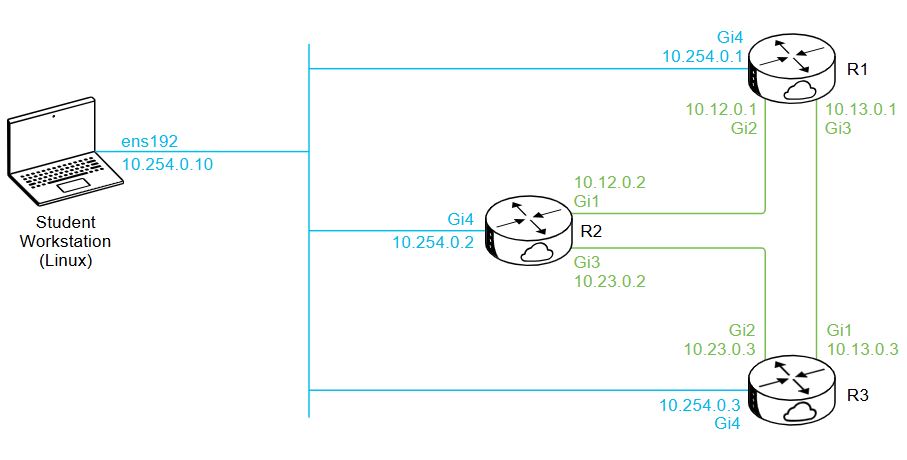
Per tutte le tipologie di erogazione, il Corsista può accedere alle attrezzature e ai sistemi reali Cisco presenti nei Nostri laboratori o direttamente presso i data center Cisco in modalità remota. Ogni partecipante dispone di un accesso per implementare le varie configurazioni avendo così un riscontro pratico e immediato della teoria affrontata. Ecco di seguito alcune topologie di rete dei Laboratori Cisco Disponibili:
Dettagli del corso
Prerequisiti
Si consiglia la partecipazione al Corso Cisco CCNA.
Durata del corso
- Durata Intensiva 3gg;
Frequenza
Varie tipologie di Frequenza Estensiva ed Intensiva.
Date del corso
- Corso Cisco CSAU (Formula Intensiva) – Su richiesta – 9:00 – 17:00
Modalità di iscrizione
Le iscrizioni sono a numero chiuso per garantire ai tutti i partecipanti un servizio eccellente.
L’iscrizione avviene richiedendo di essere contattati dal seguente Link, o contattando la sede al numero verde 800-177596 o inviando una richiesta all’email [email protected].